Roll Texturing Shot Blasting Machine
Technical Features and Application Experience of Roll Texturing Shot Blasting MachinesI. Basic Principle of Roll Texturing Shot Blasting MachinesA roll texturing shot blasting mach
Technical Features and Application Experience of Roll Texturing Shot Blasting MachinesI. Basic Principle of Roll Texturing Shot Blasting MachinesA roll texturing shot blasting mach
Technical Features and Application Experience of Roll Texturing Shot Blasting Machines
I. Basic Principle of Roll Texturing Shot Blasting Machines
A roll texturing shot blasting machine is a specialized piece of equipment designed for surface treatment of metal rolling rolls. Its core principle involves using a high-speed rotating impeller to accelerate metal shots and propel them onto the roll surface. The impact of the shots creates uniformly distributed microscopic dimples, thereby modifying the surface topography of the roll.
This surface treatment technique effectively increases the coefficient of friction between the roll and the material being rolled, improving lubrication conditions during the rolling process. As a result, it plays a significant role in enhancing the surface quality of rolled products.
II. Main Structural Components
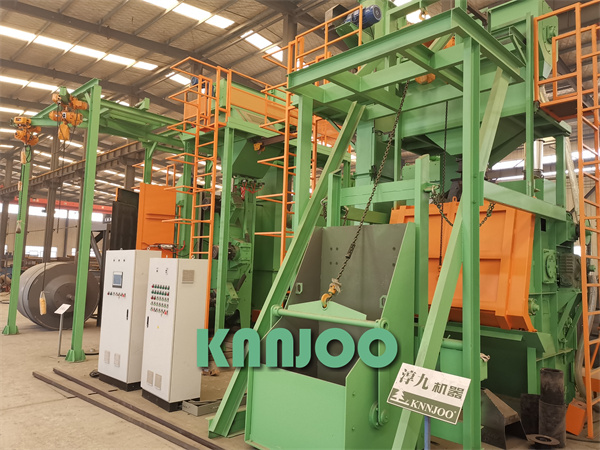
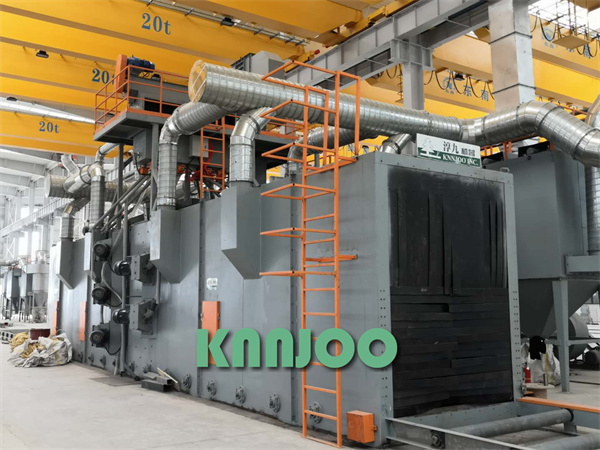
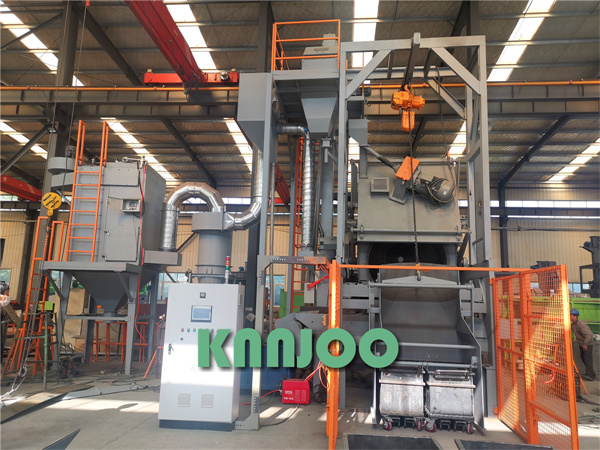
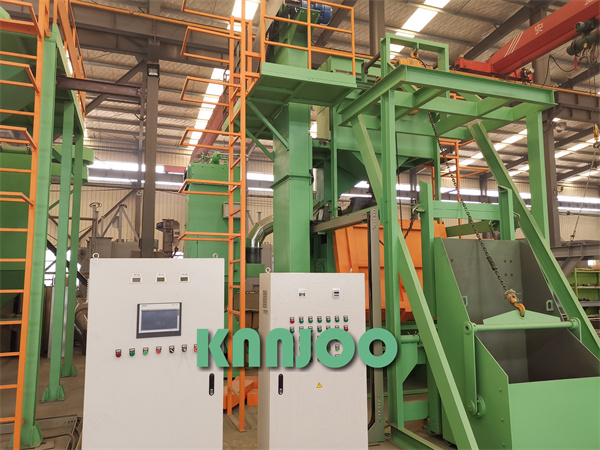
· Shot Blasting System – Comprising the impeller, shot acceleration unit, and blasting chamber; this is the core assembly that performs the actual surface treatment.
· Shot Circulation System – Consisting of an elevator, separator, and conveying mechanism; responsible for recovering and reusing the blasting media.
· Dust Collection System – Designed to capture airborne particulates generated during processing, ensuring a clean and safe working environment.
· Control System – Modern machines are typically equipped with PLC-based controls, enabling precise adjustment of processing parameters.
III. Key Technical Parameters and Process Control
· Shot Selection – Depending on the roll material and the desired surface roughness, shots of different materials (e.g., cast steel, stainless steel) and sizes (ranging from 0.1 to 1.0 mm) can be chosen.
· Shot Velocity – Typically adjustable within the 60–100 m/s range; higher speeds generally produce greater surface roughness.
· Coverage Control – Uniform surface treatment is achieved by adjusting blasting duration and shot flow rate.
· Surface Roughness – The Ra value generally falls between 0.8 and 6.3 μm, and can be tuned according to specific rolling process requirements.
IV. Application Areas and Benefits
· Cold Rolling Roll Processing – Significantly improves the surface quality of thin sheets and reduces rolling defects.
· Non-Ferrous Metal Rolling – Particularly well-suited for rolling aluminum, copper, and other non-ferrous metals.
· Specialty Material Rolling – Delivers noticeable improvements in rolling high-strength materials such as stainless steel.
The uniform textured structure formed on treated roll surfaces provides the following advantages:
· Enhanced rolling lubrication performance
· Reduced sticking or adhesion during rolling
· Extended roll service life
· Improved final product surface quality
V. Operational and Maintenance Best Practices
Daily Inspection Checklist:
· Regularly inspect shot wear levels and replenish or replace as needed.
· Monitor impeller vibration; shut down immediately for inspection if abnormalities are detected.
· Keep the dust collection system unobstructed and clean filters on a scheduled basis.
Common Issues and Troubleshooting:
· Uneven surface texture – Check shot distribution uniformity and adjust blasting parameters.
· Roughness not meeting specifications – Try switching shot types or increasing shot velocity.
· Abnormal equipment noise – Inspect bearings, impeller, and other rotating components.
Safety Precautions:
· Personal protective equipment (PPE) must be worn at all times during operation.
· Access doors must not be opened while the machine is running.
· Electrical system safety should be inspected regularly.
VI. Future Technology Trends
· Intelligent Control – Adoption of more advanced control systems to enable automatic optimization of process parameters.
· Enhanced Environmental Performance – Development of quieter, more energy-efficient equipment designs.
· Process Integration – Combining shot blasting with other surface treatment technologies for superior finishing results.
· Data-Driven Optimization – Leveraging big data analytics to fine-tune processing parameters and improve treatment consistency.
As a key surface treatment method in the metal rolling industry, roll texturing shot blasting technology continues to evolve through ongoing process optimization and equipment refinement. Going forward, it will deliver even more efficient and precise surface treatment solutions to the rolling manufacturing sector.